The moment has finally come: you have decided to buy a puppy, and soon a small ball of fluff will move in with you. What comes next is exciting, sometimes overwhelming, and one of the best experiences you can have as a dog owner. The first two weeks in particular lay the foundation for your puppy’s social behaviour. No pressure, but this period really counts.
So that you are not left with a hundred open tabs and contradicting advice, we have put everything important into one clear checklist. From preparing your home to the feeding plan, the first vet visit and your legal duties as a puppy owner in Luxembourg and Belgium, you get concrete steps instead of vague tips. We also look at how the arrival day should go, why your puppy needs up to 20 hours of sleep and which first training steps really matter.
Checklist: what to have done before your puppy arrives
Before your puppy walks through the door, your home should be ready for the puppy, not the other way round. This checklist helps you forget nothing.
Puppy-proof your home and garden
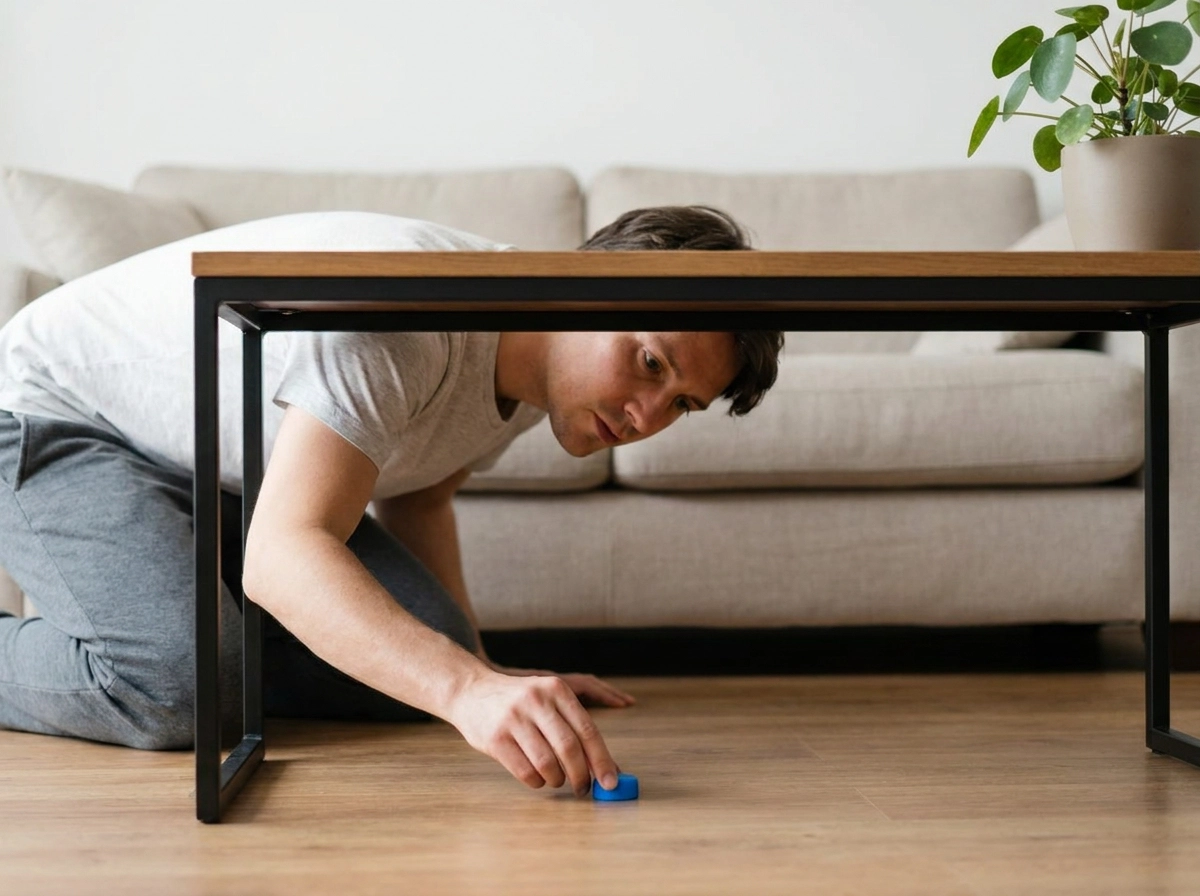
Go through every room at your puppy’s eye level. In practice that means:
- Steep stairs: secure them with a safety gate
- Power cables: hide them behind furniture or in cable ducts
- Garden ponds: cover them or fence them off
- Poisonous plants: remove them, including oleander, ivy and laburnum
Medicines, cleaning products and children’s toys must be kept completely out of the puppy’s area. Young dogs explore the world with their mouths and swallow objects faster than you can react.
Set up a sleeping place
A sturdy crate or dog bed in a quiet, draught-free corner is the ideal first sleeping place. The crate is also a safe retreat and makes house training easier later on. Put a soft blanket inside and make sure the room gets natural light without the spot being in full sun.
Buy the basic equipment
Get the following basics before your puppy arrives:
- Food: the same as at the breeder, to avoid digestive problems
- Heavy food and water bowls that do not slide
- A lead and a collar that fits a puppy
- Toys made of sturdy, non-toxic material
Breed matters for some of this. Our guide on preparing for a Maltipoo puppy shows how breed-specific needs can shape what you buy.
Ask the breeder for a scent cloth
Before collection, ask the breeder for a cloth or small blanket that has been in the litter and smells of the mother. Put it straight into the sleeping corner. The familiar smell gives your puppy emotional security in the first nights and can noticeably reduce restless hours.
Arrival day: the first hours with your new puppy
The preparation is done; now the real moment begins: your puppy comes home.
1. Travel safely from the start. Always use a transport crate for the journey home. It gives your puppy a fixed, safe place in the car and stops it from sliding around or jumping. On longer journeys, plan a short break in a quiet place every 30 to 45 minutes so your puppy can drink and relieve itself.
2. Explore, but calmly. Let your puppy explore your home at its own pace. All rooms may be open, but accompany it calmly and without fuss. Avoid loud music, excited calls or hectic movements. A puppy’s nervous system is very sensitive to overstimulation.
3. Put the scent cloth down straight away. Place the breeder’s cloth in the sleeping corner before your puppy enters it for the first time. The familiar smell of mother and littermates is calming and helps ease the stress of leaving the breeder.
4. Visitors, please wait. Ask family and friends to postpone their visits until the third day. The first 48 hours belong to your puppy and you alone. Every new face is an extra stimulus it does not need yet.
5. Other pets: slowly and supervised. If you already have a pet, introduce the two carefully. Short, calm meetings under direct supervision are the right start. Never leave them alone together until you are sure both are relaxed with each other.
Feeding plan: how to feed your puppy in the first two weeks
Keep the breeder’s food for now. Your puppy has enough to process in the first days. A sudden change of food puts strain on its still sensitive digestion and often leads to diarrhoea or vomiting. Keep exactly the food the breeder used, and ask beforehand for a supply or the exact product name.
Meals: more often, smaller, regular
A puppy is not a small adult dog. Its stomach holds little and its energy needs are high. Depending on age, feed three to four times a day at even intervals, for example in the morning, at midday, in the afternoon and in the evening. Fixed feeding times also help with house training, because digestion becomes more predictable.
Why puppy food is not a marketing trick
Growing dogs need considerably more protein and energy than adults. According to the AAFCO nutrient profiles, the minimum crude protein for puppies is 22.5 percent, against 18 percent for adult dogs. Puppy food covers exactly that higher need. Adult food does not do so reliably, especially for small or fast-growing breeds.
Changing food step by step
If you want to use a different food in the long run, wait until at least the second week and then switch gradually over seven days: start with 25 percent new and 75 percent old, and increase the new share every day. That way the gut adjusts at its own pace.
Fresh water, always. Use a stable water bowl and clean it daily; bacteria grow quickly in standing bowls. Rinse the food bowl after every meal as well.
Sleep and daily rhythm: why 20 hours of rest is not a luxury
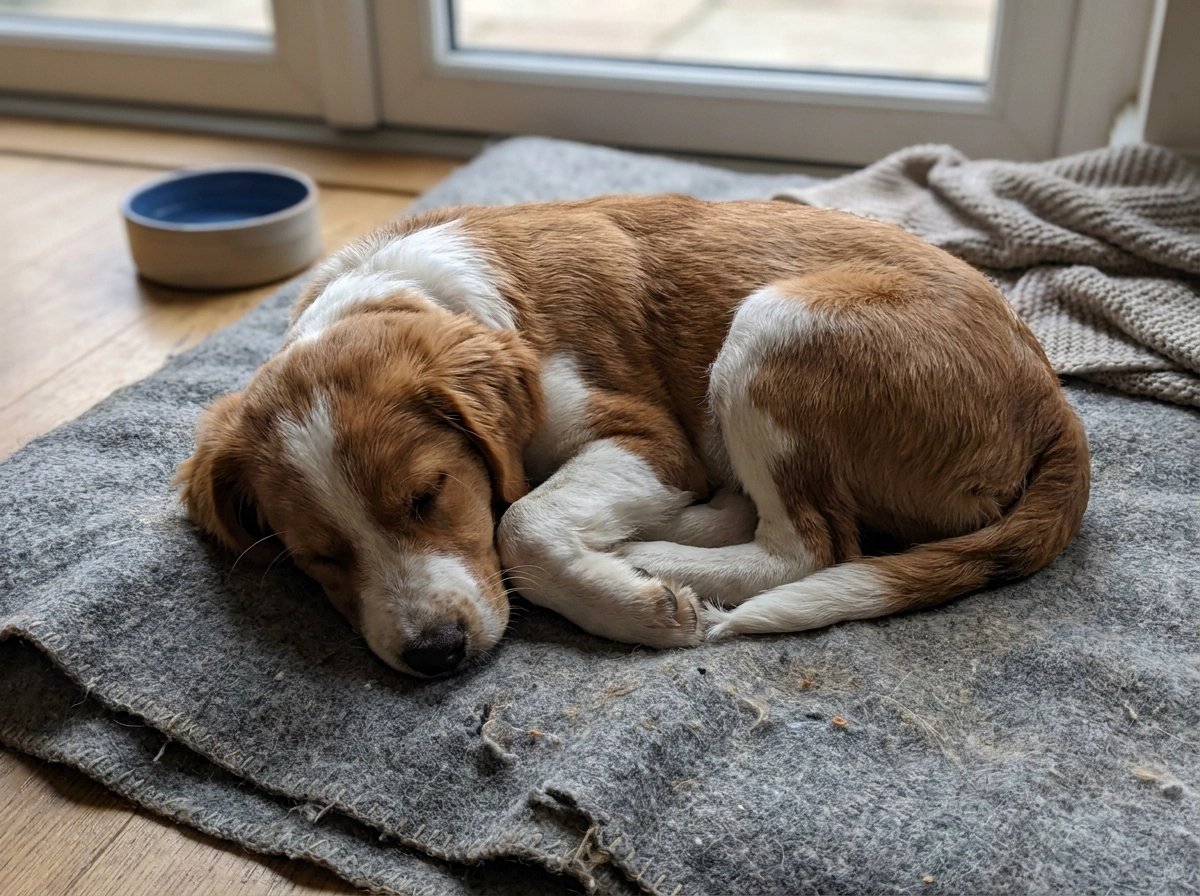
Puppies sleep up to 18 to 20 hours a day. That is not an exaggeration but a physical need. During this time the brain processes new impressions, the body grows and the immune system gets stronger. Constantly encouraging your puppy to play or taking it into noisy places slows exactly these processes down and risks lasting stress.
Introduce fixed rest periods
From the start, set fixed rest periods in which your puppy lies undisturbed in its crate or bed. The crate is its personal retreat, never a punishment. Door open, blanket inside, done.
Important for children and visitors: a sleeping puppy is never woken up. No stroking, no calling, no picking up. This is the basic rule for a balanced dog.
Sample schedule for the first week
A simple, repeating daily routine gives your puppy security. Here is a realistic basic pattern:
| Time | Activity |
|---|---|
| 07:00 | Wake up, straight outside (toilet) |
| 07:15 | First meal |
| 07:45 | Short play session (10–15 min) |
| 08:00 | Sleep (2–3 hours) |
| 11:00 | Wake up, toilet, meal |
| 11:30 | Calm exploring or play |
| 12:00 | Sleep |
| 15:00 | Wake up, toilet, meal, play |
| 16:00 | Sleep |
| 19:00 | Evening round: toilet, meal, quiet time |
| 21:00 | Night’s rest |
You do not have to follow this to the minute. What matters is repetition: puppies follow routines, not clock times.
First training steps: house training, learning its name and basic obedience
House training: timing is everything
Take your puppy outside straight after waking up, after every meal and after playing. These three moments are when it simply has to empty its bladder. Always use the same spot in the garden or right outside the door; a fixed place helps your puppy make the connection quickly. When it works, praise or give a small treat immediately. If an accident happens indoors, clean it up calmly without scolding, which only confuses.
Link its name to good things
Say your puppy’s name when you offer something nice: food, a cuddle, a game. That way it connects its name with good things and responds reliably. Never use its name when scolding. If it does something wrong, simply correct the behaviour without saying its name.
Basic obedience from week two
From the second week you can carefully start with simple commands. Five minutes per session at most, which is a puppy’s attention span. Start with “sit”: hold a treat above its nose and move it slightly backwards; as soon as the puppy sits, say the command and reward straight away.
Learning bite inhibition
If your puppy bites too hard while playing, stop the game immediately and turn away briefly. No long reaction, no excitement. This short time-out shows clearly that hard biting ends the game and gentle play keeps it going.
Vaccinations and vet visits in the first two weeks
Step 1: book an appointment within 48 to 72 hours. Call the vet before or right after your puppy arrives. At the first visit the vet checks general health and weight and answers your first questions.
Step 2: bring the vaccination record. A good breeder hands over the puppy with its vaccination record or EU pet passport. Woefkesranch puppies leave with theirs. The vet checks which vaccinations have been given and which are still due.
Step 3: complete the core vaccinations. The standard puppy vaccinations in Luxembourg and Belgium cover:
- Distemper
- Hepatitis
- Parvovirus
- Leptospirosis
The primary course is given in several doses from about eight weeks of age. Your vet sets the exact schedule based on your puppy’s age.
Step 4: discuss deworming. Puppies are usually dewormed every two weeks until they are twelve weeks old. Ask at the first visit when the breeder last dewormed, so there is no gap.
Step 5: have the microchip checked. The vet reads the chip at the first visit and confirms that the number in the vaccination record or passport is correct. If something does not match, sort it out with the breeder straight away.
Legal duties for puppy owners in Luxembourg and Belgium
Besides the vaccination record, a few administrative tasks need doing in the first weeks. The rules differ between the two countries and, for some points, between municipalities.
Microchip. In both countries every dog must be identified with an ISO-standard microchip (ISO 11784/11785). Breeders chip their puppies before sale. Keep the proof safe.
Luxembourg. Declare your dog to your commune. The commune asks for proof of identification and vaccination and for a certificate of third-party liability insurance, which is compulsory for dog owners in Luxembourg. Communes also levy an annual dog tax; ask your commune for the amount and the deadline.
Belgium. The breeder registers the puppy in the national database (DogID) and the registration is transferred to your name; check that you receive the confirmation. Some municipalities charge a dog tax, and liability insurance is strongly recommended (a family liability policy often covers your dog). Ask your municipality which rules apply where you live.
Travelling across borders? Travelling with your puppy to another EU country requires an EU pet passport with a valid rabies vaccination. Rabies vaccination is possible from 12 weeks of age and becomes valid 21 days later.
First socialisation: when and how
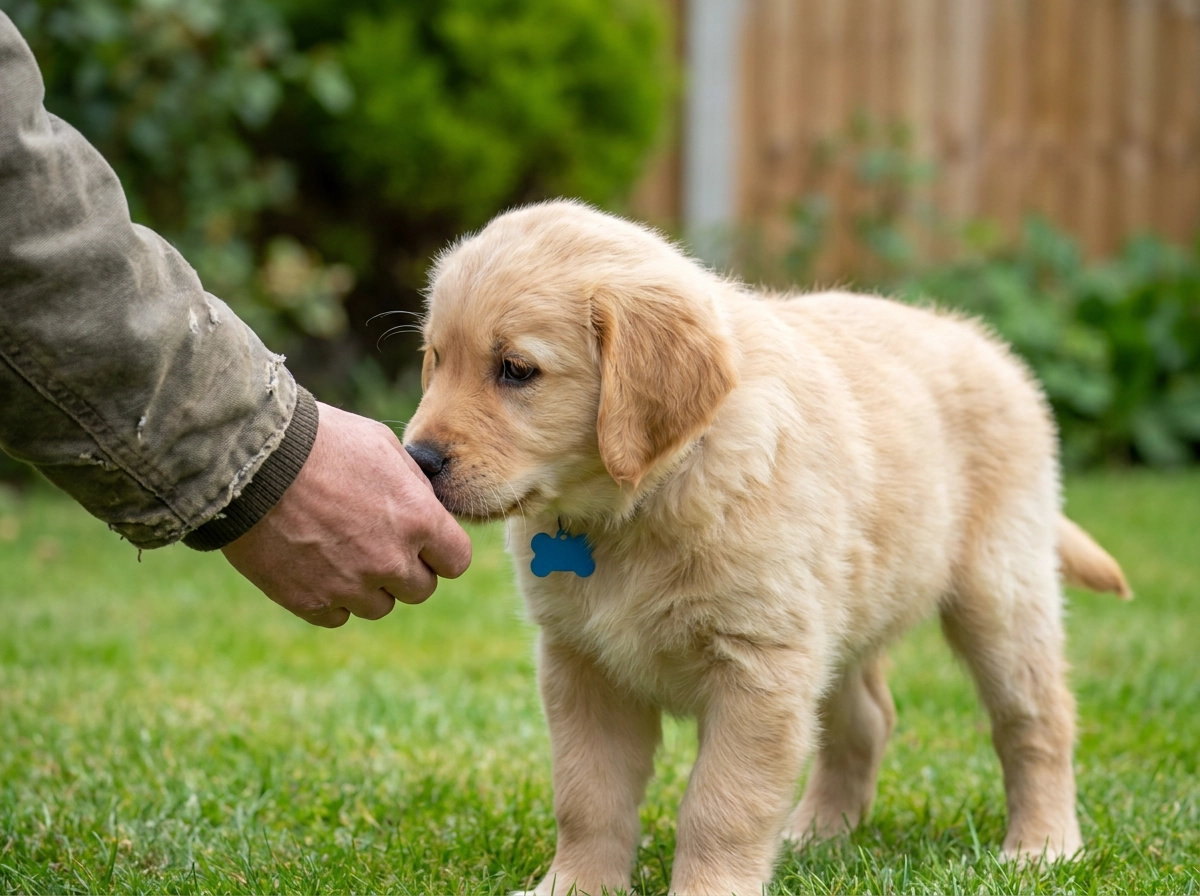
The socialisation window closes early. Between about the third and twelfth week of life a puppy learns what belongs to the normal world. What it gets to know in this phase, it later handles calmly. What is missing can cause insecurity or fear that is hard to correct. You have a short window, so use it actively.
Step by step to a safe world
Introduce new stimuli always gradually and without pressure:
- Sounds: vacuum cleaner, doorbell, traffic, first from a distance and at low volume
- Surfaces: tiles, grass, paving, soft carpet, letting it explore each new texture on its own
- Everyday situations: cyclists, prams, umbrellas, shown briefly and linked straight away with praise
If your puppy shows signs of stress, such as a tucked tail, trembling or backing away, increase the distance and slow down.
People and other animals
Your puppy meets new people first at home, in a relaxed atmosphere with familiar faces around. Meetings in public places wait until the vaccinations are complete; your vet tells you exactly when that is.
For meetings with pets you already have: start on neutral ground, for example in the garden or a hallway, with both animals calm and always supervised. Never leave them alone together until both are reliably relaxed.
First walks
Short, calm, without distractions. Ten to fifteen minutes in a quiet street is plenty at first. Beagles and similarly curious breeds need especially consistent guidance, because their keen nose distracts them quickly.
Breed notes: Pomeranian, Maltipoo, Beagle and Pomsky
General socialisation is a good start, but every breed has its own tendencies that are worth knowing in the first two weeks.
Pomeranian
Small body, big temperament. Pomeranians are lively and curious and need daily mental stimulation such as sniffing games or short training sessions. Above all, secure the stairs: their low weight makes falls more dangerous than they look.
Maltipoo
Maltipoos are very social and strongly attached to their people. That makes them lovable, but also prone to separation anxiety. From the start, make short absences positive: first a few minutes, then gradually longer. Your puppy learns that being alone is nothing threatening.
Beagle
Beagles follow their nose, consistently and stubbornly. A smell beyond the garden fence is enough to send them exploring. Secure garden and home especially thoroughly: no gaps in the fence, no open doors, nothing tempting within reach on the counter. Beagles also need plenty of exercise to stay balanced.
Pomsky
The Pomsky combines the energy of the Husky with the cleverness of the Pomeranian. The result is a dog that does not just enjoy activity but really needs it. Without enough of it, unwanted behaviour such as chewing or excessive barking quickly appears. Read more in our guide to Pomsky temperament and personality.
For all four breeds: these notes describe common tendencies, not guaranteed behaviour. Every dog is an individual.
Costs: what to expect in the first two weeks
A realistic overview, by type of cost:
- Basic equipment: 80 to 250 euros (one-off). Crate, bowls, lead, collar, toys and bed. Cheaper sets start at about 80 euros; durable quality is closer to 200 to 250 euros, and a sturdy bed or crate lasts for years.
- First vet visit and vaccination: 50 to 120 euros, depending on the practice and region. Bring the breeder’s vaccination record: vaccinations already given do not need repeating.
- Food for the first two weeks: 20 to 60 euros, depending on breed and size. Small breeds such as Pomeranians or Maltipoos are at the lower end, larger breeds such as Beagles higher.
- Registration and dog tax: 0 to 60 euros in the first year, depending on where you live.
- Liability insurance: from about 5 to 15 euros a month, depending on breed, cover and insurer.
Estimated total for the first two weeks: about 175 to 510 euros, depending on your starting point, breed and place of residence.
Emergency contacts to keep at hand
Vet and emergency service. Choose your vet before your puppy arrives and save the number in your phone. Ask explicitly whether the practice handles emergencies outside opening hours, or who covers at night. Also find an animal clinic nearby that takes puppy emergencies around the clock.
Poison Centre. Puppies explore the world with their mouths, and sometimes something dangerous ends up there. Note these numbers now and call your vet as well:
- Belgium: +32 70 245 245
- Luxembourg: 8002 5500 (free)
Your breeder as first point of contact. Keep Woefkesranch’s contact details at hand. For breed-specific questions, such as a Pomeranian’s diet or a Pomsky’s social behaviour, an experienced breeder is often faster and more precise than an internet search. Many questions in the first weeks can be settled with a short call.
In short: the five most important steps
- Secure your home: remove cables, poisonous plants, cleaning products and access to steep stairs from the puppy’s area
- Prepare a sleeping place: a quiet, draught-free corner with the breeder’s scent cloth
- Keep the breeder’s food: no change of food for at least a week
- Book a vet visit: within 48 to 72 hours of arrival
- Sort out the legal duties: declaration or registration, dog tax and insurance
The most important advice for first-time owners is simple: stay calm. Your puppy does not need a perfect environment, but time and patience. Small accidents during house training or restless nights in the first week are normal, not a sign that you are doing something wrong.
Buying from a responsible breeder gives you a real head start: health-checked puppies, a complete vaccination record and expert aftercare for breed-specific questions. Questions about a Woefkesranch puppy? Contact us.

